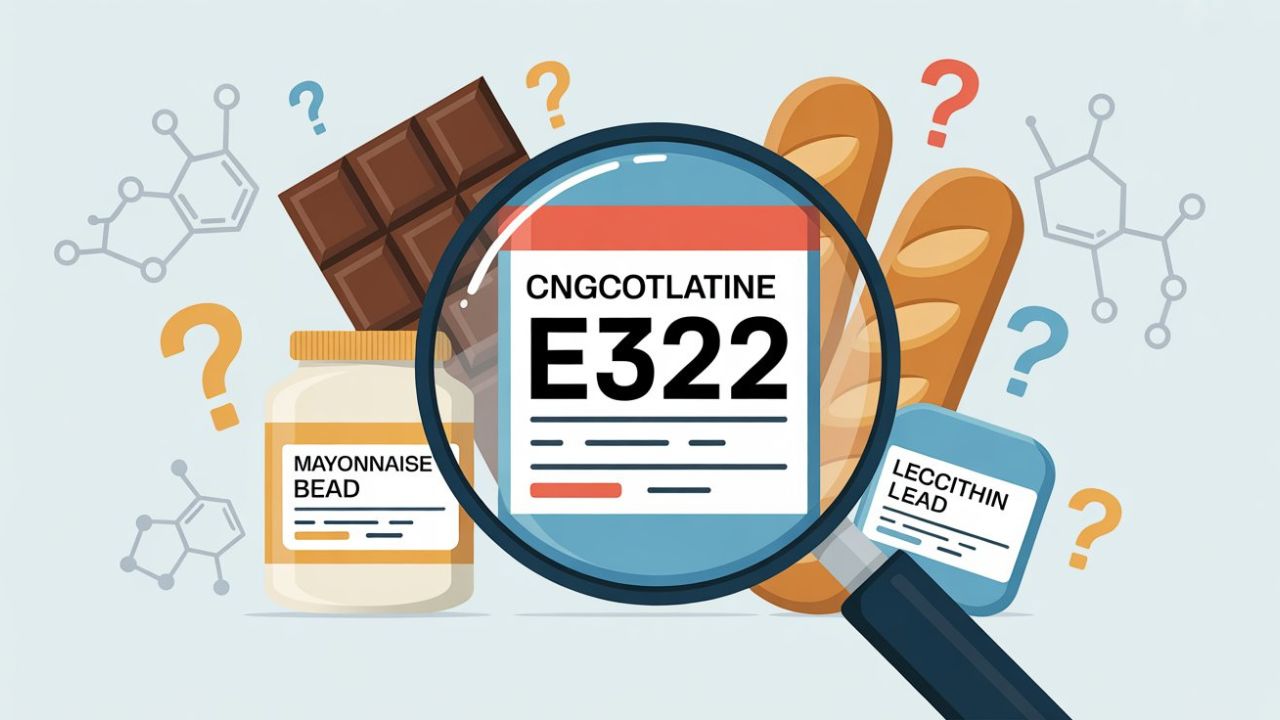
You must have surely noticed it on the labels of chocolate bars, jars of mayonnaise, loaves of bread, etc.: E322.
The other secret ingredient that I will not tell you about, but which renders your favourite snacks smooth and creamy, is E322 or Lecithin. To the health-conscious buyer, however, a label with a code on it tends to raise a red flag. Is it natural? or synthetic? and what about safer for your family?
I have been learning about food labelling and industry laws throughout the years, and now I am peeling the veil of this all-purpose additive. Do you care about the side effects of E322 food code? Do you pose the question whether E322 food code is haram or halal? Then you will get the answer to your questions in this guide.
What is E322 Made Of? Understanding the Source
In essence, lecithin is an organic substance that is found in the bodies of both plants and animals as a fatty substance. Its original source was the extraction of the egg yolks (the Greek word lekithos can be translated as the yolk of an egg), but the industrially-made product is now much larger.
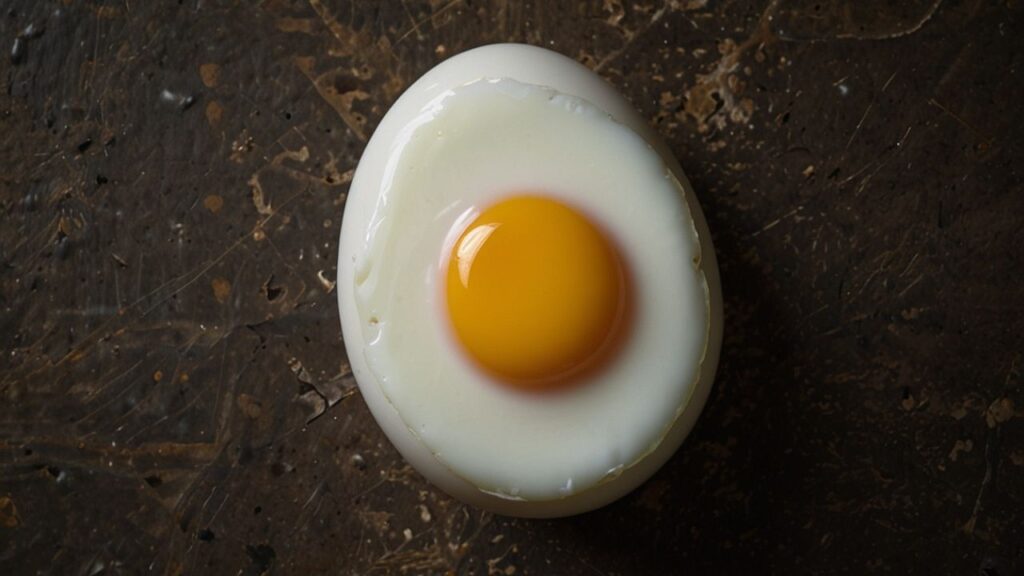
Soy lecithin (E322 food code) is present in most E322 products in the supermarket. It can, however, be obtained in:
Sunflower seeds
Rapeseed (Canola)
Corn (Maize)
Egg yolks
It is a phospholipid-glycolipid complex that is chemically complicated. It has been applied as a food industry emulsifier. Suppose it is the glue that holds oil and water together. It would grit your chocolate and render your salad dressing a greasy mess in a few minutes.
E322 Food Code: Hazardous or Unknowingly Hazardous?
The main question everyone is wondering is whether the E322 food code is safe. Lecithin has been declared non-toxic by the leading health organisations like the FDA (which has given it the GRAS or Generally Recognised as Safe designation) and EFSA. Unlike other food preservatives that are artificial, lecithin is one of the requirements of our bodies. It contains choline, which is a nutrient that is significant to the liver and the brain.
Safe, nevertheless, will not always be riskless to all. This is not a danger, but as a poison, the panic-wholesomeness of processed foods that we consume nowadays is an issue to be worrying about. Most of the human beings take it through the system without any problems, but when an individual has some sensitivities, then it is a different story.
Professional Advice: E322 is natural, but the treatment normally involves such chemical solvents as hexane. When you desire a clean-label lifestyle, you desire to locate organic sunflower lecithin, which is usually cold-pressed and not hexane-free.
Unreported Side Effects: E322 Food Code Allergy and Side Effects.
Despite the fact that the vast majority of the population can be treated with lecithin, it has E322 food code side effects and risks, and you need to be aware of them:
The Allergy Factor
The highest risk associated with the E322 risk is when an individual is seriously allergic. These micro-amounts can even get a reaction in case you are very sensitive to the E322 food code allergy.
Digestive Discomfort
Lecithin can induce nausea, stomachache or diarrhoea when administered in large amounts in a specific percentage of patients. This would not happen in your regular food portions, but with the lecithin supplements that you have on top of a high-processed foods diet, it can happen.
GMO Concerns
Gemini said
In much of the world, farmers genetically modify soy. Another bioengineered ingredient, soy lecithin (E322 food code), frequently acts as a stealth ingredient.
E322 Food Code: Halal or Haram?
Dietary status of an additive is, in fact, as important as the safety of the additive to many of my readers. Whether the E322 food code is haram or halaal is purely subject to its origin.
Egg-based: This is also considered Halal.
it would be Haram.
The Bottom Line: Manufacturers use vegetarian E322 (typically soy) in 99% of modern packaged products, so most religious diets accept it.
In case of doubts, there is a potential presence of either a suitable veg or a Halal certified label on the package.
Is E322 Bad for You? The Verdict
So, is the E322 food code bad for you?
E322 is one of the least dangerous E-numbers in case you are a healthy person with no allergies.
Real Life Case Study
Consider a high-quality chocolate confection. Lacking E322, the manufacturer would then have to work with pricier cocoa butter and spend more hours conching (mixing) the chocolate to achieve the same silky melt-in-your-mouth feel. E322 makes quality textures cheap and available.
Nevertheless, with chronic inflammation or gut problems, according to some researchers, the general emulsifiers may destabilise the gut bacteria. In case that sounds like you, it is always good to be on the gold standard of doing things, which means following the example of whole foods that do not need labels.
Conclusion: How to Navigate E322
E322 is a complex additive. It’s a vital nutrient, a culinary miracle worker, and—for a small group of people—a potential allergen.
For the average consumer, there is no need to panic when you see it on a label. It is generally safe, widely considered halal when plant-based, and serves a clear purpose in food quality. But as with everything in nutrition, moderation and awareness are key.
What’s your take on food additives? Do you try to avoid all E-numbers, or do you focus on specific ones? Let me know in the comments below—I’d love to hear your perspective!